
Central air conditioning: what to consider.
Central cooling is a system, not just the box outside. Before replacing equipment, look at the indoor components, airflow, and the rooms you want to improve.
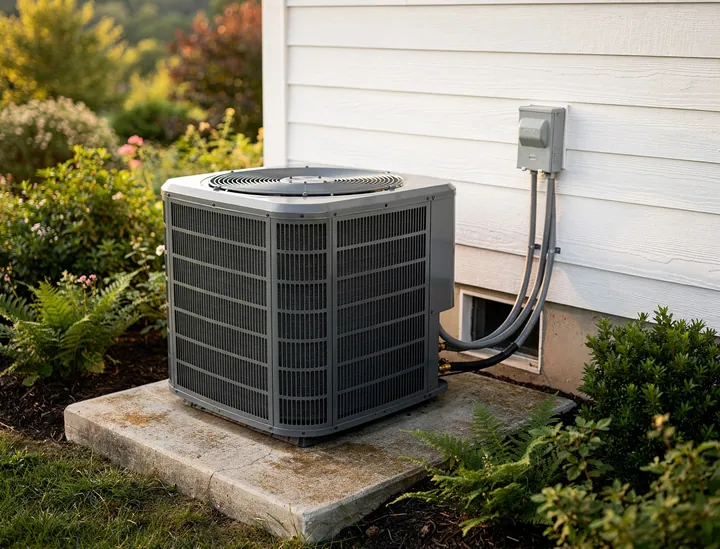
The outdoor unit is only one part.
A typical split AC system uses an outdoor condenser and compressor, an indoor evaporator coil, and a blower that moves air through ducts. The indoor and outdoor equipment must be compatible. Replacing one part calls for checking the rest of the system, rather than assuming a new condenser will fit.
Size it for the house you have now.
Equipment selection should follow a cooling-load assessment, including windows, insulation, air leakage, and room layout. Extra capacity is not automatically better. Ask how the proposed system will handle both temperature and moisture, and whether additions or renovations have changed the original requirements.
Compare the whole replacement plan.
A useful proposal identifies the matched equipment, thermostat compatibility, refrigerant-line requirements, condensate route, electrical needs, and startup checks. SEER2 describes rated seasonal cooling efficiency; it is not a prediction of your bill. Duct condition and installation quality also matter.
Keep airflow in the conversation.
A blocked filter, restricted return, or leaking duct can affect comfort even when the equipment is new. Follow the manufacturer’s filter and maintenance guidance. Tell a professional about unusual cycling, water near the indoor unit, or rooms that stay warm. Refrigerant and electrical work belong with qualified people.
Compare the approach, not just the equipment.
| Approach | Worth discussing when | Check before deciding |
|---|---|---|
| Repair the existing system | The problem may be limited to a repairable component. | Diagnosis, repair cost, equipment condition, and parts availability. |
| Replace central AC | You want whole-home cooling through usable ducts. | Matched components, load sizing, airflow, and controls. |
| Consider ductless cooling | One area lacks practical duct access. | Room layout, drainage, electrical supply, and winter needs. |
Make the next conversation useful.
These guides explain equipment choices. Mountain Air’s specific products, installation, repair, and maintenance capabilities are confirmed directly.
Talk about your homeDoes a new outdoor unit always require a new indoor coil?
Not always, but compatibility must be established for the exact equipment combination. Ask which existing components can remain and how the proposed system is rated.
Should I buy the same size as my old AC?
The old size is a starting point for discussion, not a sizing method. Changes to the home and a fresh load assessment can point to a different selection.
Can a smart thermostat be added at the same time?
Only if it supports the system’s controls and electrical requirements. Some communicating or multi-stage equipment needs a specific controller.